
This page contains affiliate links. If you buy through them, we may earn a commission at no additional cost to you. Read our affiliate disclosure.
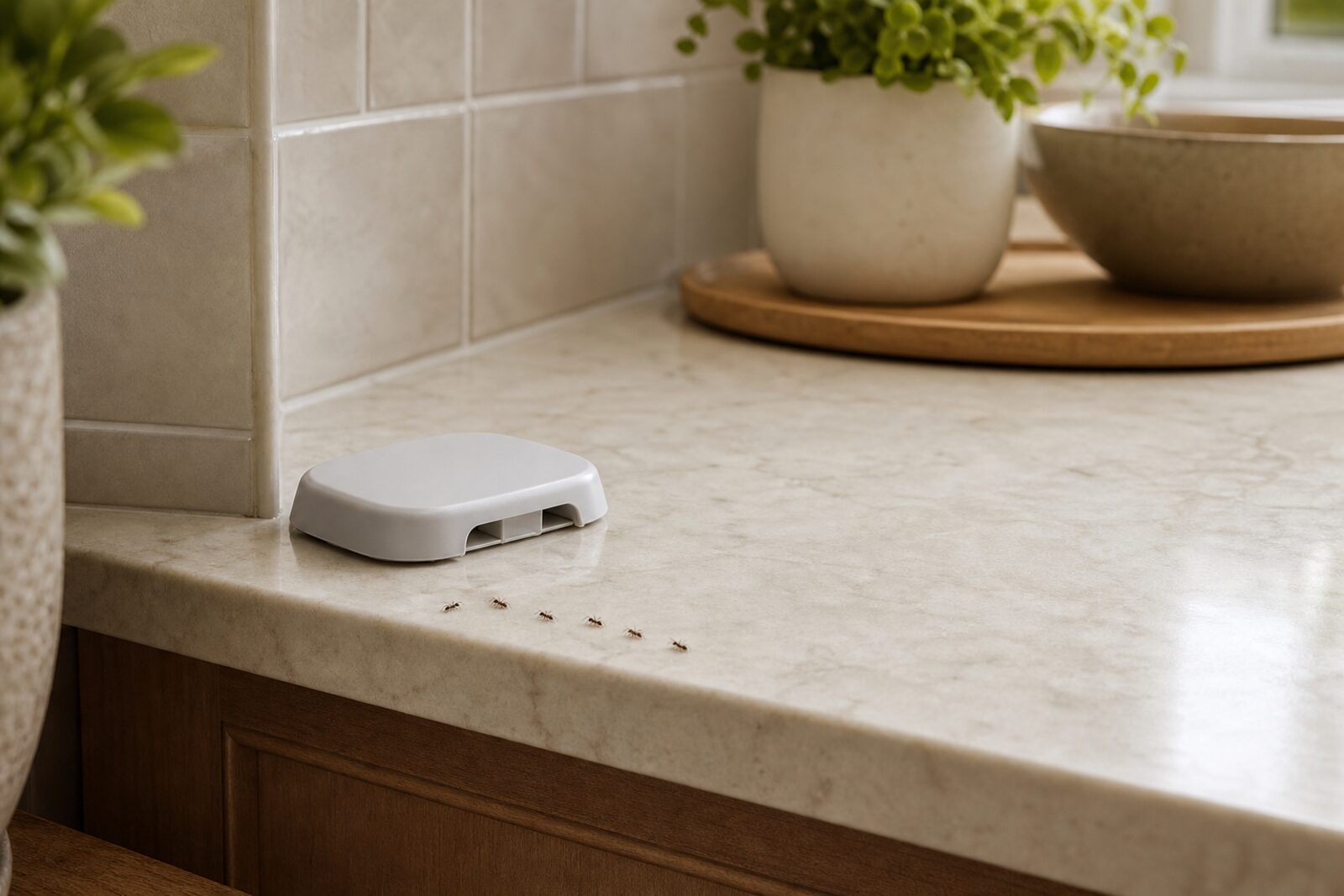
If you're wiping the same line of ants off your kitchen counter every morning, the problem isn't the ants you see — it's the colony you can't. A spray kills what's in front of you and leaves the nest untouched, so the trail is usually back within a day or two. This guide compares six widely sold ant killers — baits that travel back to the colony, contact sprays for quick knockdown, and barrier treatments that block re-entry — based on active ingredients, intended use, and what owners consistently report. We'll flag which make sense indoors, which are built for the yard, and which are the better call with pets or kids around.
- TERRO T300 Liquid Ant Baits — Best Overall
- Advion Ant Gel Bait — Best for Severe Infestations
- Amdro Ant Block Home Perimeter Ant Bait — Best for Outdoors
- Mighty Mint Peppermint Oil Spray — Best Pet-Safe Option
- Ortho Home Defense Max — Best Long-Lasting Barrier Spray
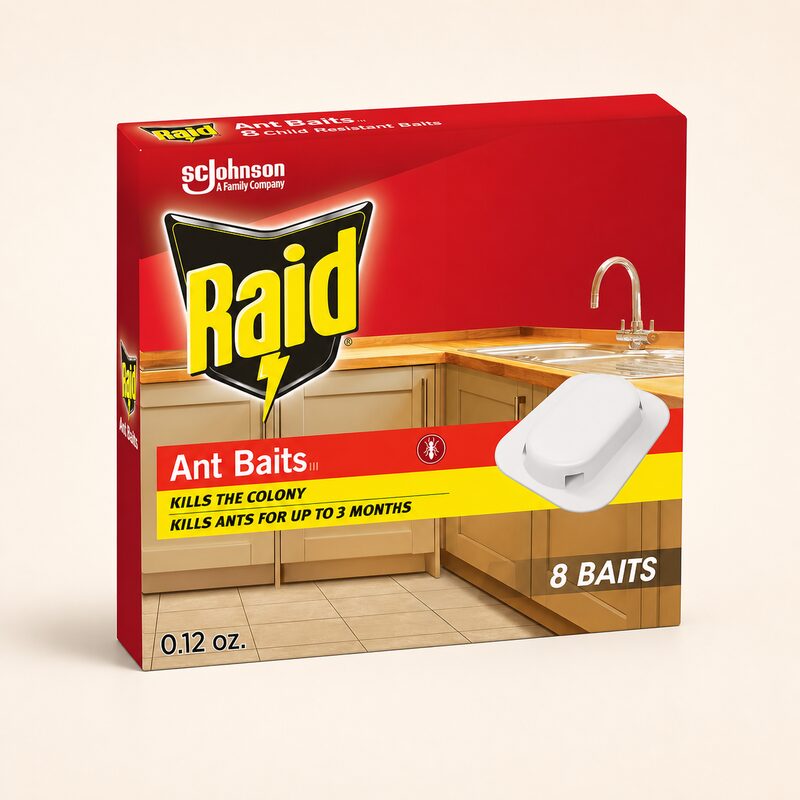
- Raid Ant & Roach Killer Spray — Best for Quick Spot Treatment
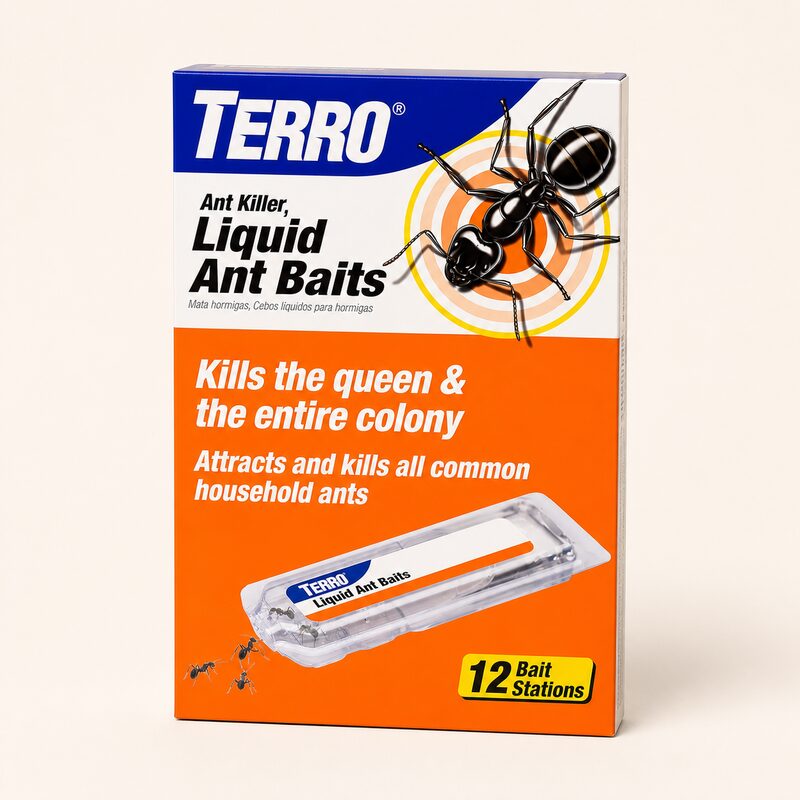
TERRO T300 Liquid Ant Baits
Six pre-filled stations per pack, around $7–$10, holding a sugar-based liquid bait with borax as the active ingredient. Worker ants drink it and carry it to the nest to share with the queen — unlike a spray, which only kills ants already out foraging.
It targets sugar ants, the most common kitchen invaders in the US. Expect heavier traffic the first few days, then a drop-off within one to two weeks. Place stations on trails, out of reach of kids and pets. Indoor-only; TERRO sells separate outdoor stations.
- Targets the colony, not just visible ants
- Pre-filled — no mixing or measuring
- Inexpensive and widely available
- Activity often looks worse before it improves
- Only works on sugar-feeding species; carpenter ants may ignore it
- Stations need days undisturbed, hard in busy kitchens
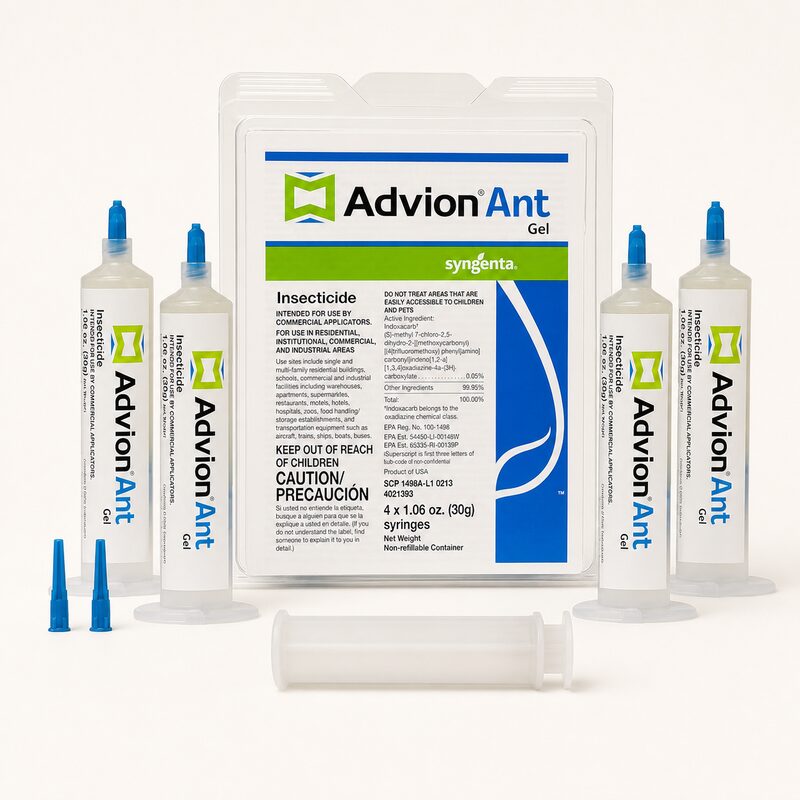
Advion Ant Gel Bait
A professional-grade bait gel sold in a syringe applicator for roughly $15–$25. The active ingredient, indoxacarb, is slower-acting than borax: ants feed on it and live long enough to return to the nest and pass it to other workers, effective on larger, established colonies.
You dot small amounts along baseboards, cabinets, or known trails rather than setting out a station — more control, but more direct handling, and a common step up when over-the-counter baits haven't resolved an infestation. Keep it away from kids and pets, and wear gloves during application.
- Same ingredient professionals use for tough, established colonies
- Slow-kill design improves colony-level knockdown
- One syringe covers many placement points
- Less contained than sealed bait stations
- Requires dotting gel in multiple spots by hand
- Can take one to two weeks for full effect
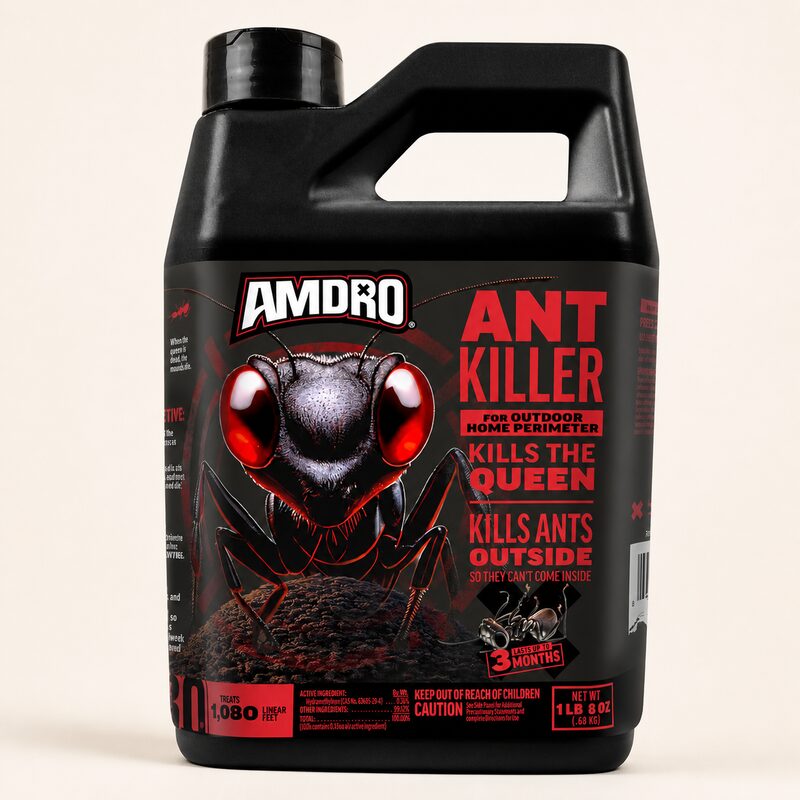
Amdro Ant Block Home Perimeter Ant Bait
A granular bait scattered around a home's perimeter, driveway, or yard mounds, generally $10–$15 a bag. The active ingredient, hydramethylnon, works like other baits — ants carry granules into the nest — in a form built for outdoor spreading.
Reach for this when it's really a yard problem: mounds near a patio, or ants following a foundation line indoors. Owner reviews consistently mention noticeable mound reduction within about a week when applied around the full perimeter. Keep pets and kids off treated areas until watered in; it's outdoor-only.
- Built for perimeter and yard application, not just spot mounds
- Granular format covers ground quickly with a spreader
- Effective on outdoor species indoor baits target less well
- Needs watering-in to activate; results depend partly on weather
- Rain soon after application can wash granules away
- Not labeled or effective for indoor use
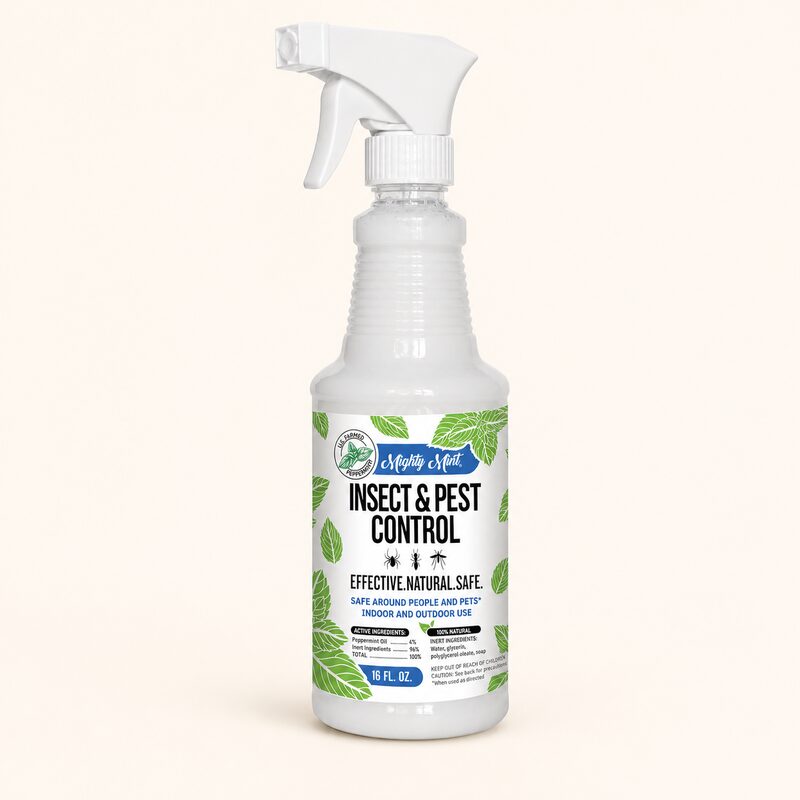
Mighty Mint Insect & Pest Control Peppermint Oil Spray
A peppermint-oil spray, usually $15–$20 for a 16-ounce bottle, positioned as a plant-based alternative to synthetic sprays. Concentrated peppermint oil disrupts ants' scent trails and acts as a contact irritant rather than a colony-eliminating bait — a repellent, not a long-term fix.
It's commonly used on windowsills, doorframes, and countertops where households want to avoid a synthetic insecticide near food-prep areas. Owner reviews consistently describe it as effective at breaking up visible trails, though it doesn't reach the nest. It's lower-toxicity than synthetic sprays, but concentrated oil can still irritate skin, eyes, or a pet's nose on contact, so the label's ventilation directions still apply.
- Lower-toxicity, appealing for kitchens and homes with pets
- Pleasant scent compared to traditional pesticide sprays
- Good for immediate trail disruption on counters
- Doesn't reach the colony; ants can return once scent fades
- Needs more frequent reapplication than a bait or barrier spray
- Not a fix for a larger infestation
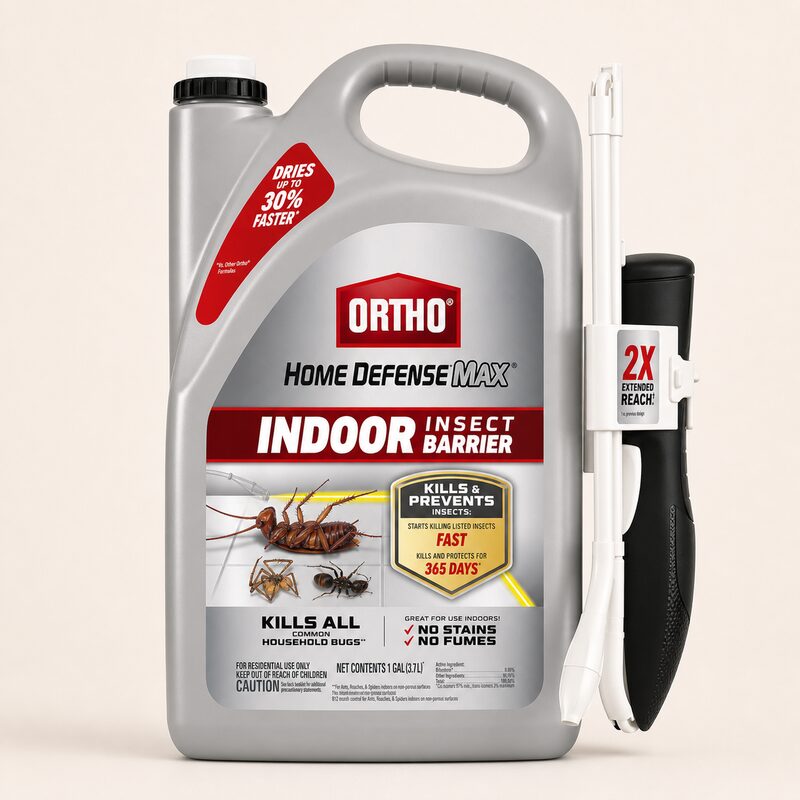
Ortho Home Defense Max Indoor & Perimeter Insect Killer
A ready-to-use trigger spray, around $10–$13, built to create a residual barrier rather than just knock down ants on contact. The active ingredient (bifenthrin in most current formulations) keeps working on surfaces for weeks when sprayed along baseboards and the foundation.
Good fit when ants keep entering through the same cracks or gaps — treating entry points creates a barrier that keeps killing crossing ants for weeks. It's less useful alone if a colony is already established indoors, since it's a barrier product, not a bait. Keep people and pets off treated surfaces until dry.
- Residual barrier keeps working on surfaces for weeks
- Labeled for both indoor baseboards and outdoor foundation use
- Effective at stopping new ants from entering once treated
- A barrier product, not a bait — doesn't reach an existing indoor nest
- Treated surfaces stay off-limits to pets and kids until dry
- Stronger odor and more caution needed around food-prep areas
Raid Ant & Roach Killer Spray
The classic aerosol can, around $5–$7, built for immediate contact kill rather than any barrier or bait effect. The active ingredients are typically synthetic pyrethroids that kill on contact within seconds — the product most people already keep under the sink.
It has no colony effect: spraying visible ants leaves the nest untouched, so a fresh trail commonly reappears within a day or two. Owner reviews consistently describe it as reliable for fast knockdown, a companion to a bait rather than a replacement. Ventilate the room and keep it off food-contact surfaces.
- Kills on contact within seconds
- Cheap, widely available, useful alongside a bait
- Also labeled for roaches and other common pests
- No effect on the colony; trails typically return once it dries
- Aerosol residue and fumes require ventilation and cleared food surfaces
- Can interfere with baits if sprayed nearby
Baits vs. sprays: which should you use?
How baits work, and why killing the colony matters
A colony can hold thousands of workers supporting a queen, so killing the ants on your counter does nothing to her — the colony just produces more. Baits exploit foraging behavior: a worker finds an attractive food source and carries it back to share with nestmates and the queen. That's why baits look worse before they get better — more ants at the station means more bait reaching the nest. Slower-acting ingredients, like the indoxacarb in Advion, let the ant survive long enough to get home.
When sprays make sense
A contact spray like Raid is right when ants are on a surface and need to be gone in seconds. A residual barrier like Ortho Home Defense Max is right when ants keep entering through the same gaps. Neither reaches the nest, so both work best alongside a bait — bait first, spray only away from active stations.
Carpenter ants are a different problem
Carpenter ants are larger, often black or reddish-black, and tunnel into wood to nest — they don't eat it, but excavate it, which can mean structural damage over time. Sugar-based baits are far less effective on them, since their diet leans toward protein. Signs include sawdust-like frass near baseboards, which calls for a carpenter-ant-specific bait or professional inspection.
When to call a pro
Call a licensed pest control company if bait stations show no drop in activity after two to three weeks, if you see carpenter ants with wood damage, or if the infestation has clearly outpaced DIY products. A professional can also identify the species, which changes which bait will work.
Frequently asked questions
Why do more ants show up right after I put out bait?
Expected, not a failure. A spike in the first few days usually means bait is being carried back to the colony, with activity typically dropping within one to two weeks.
Can I use a spray and a bait at the same time?
Yes, but placement matters — spraying near an active bait station can kill the ants you need alive to carry bait back to the nest. Bait first, and apply any spray only in areas away from bait placements.
Are these products safe to use with pets in the house?
No pesticide should be called completely safe. Bait stations are generally lower-risk since the bait is contained, but still need placement pets can't chew into. Sprays carry more exposure risk while wet; peppermint-oil products are lower-toxicity but can still irritate a pet's skin or nose on contact. Always follow the specific label.
How long does it take to get rid of an ant colony with bait?
Most consumer baits take one to two weeks to show a real reduction, longer for a large colony. Removing stations too early, while ants are still feeding, is a common reason baiting appears not to work.
Why do ants keep coming back even after I clean the counter?
Cleaning removes the food source and disrupts the scent trail short-term, but doesn't touch the colony. An established trail typically finds a way back unless the colony is addressed with bait or the entry point is sealed with a barrier spray.
Bottom line
For most households dealing with a recurring kitchen ant trail, TERRO T300 Liquid Ant Baits remain the best overall starting point — inexpensive, simple to place, and working with ants' own behavior to reach the colony. For a larger infestation, Advion's gel is worth stepping up to; for yard mounds, Amdro Ant Block is the more purpose-built choice; and a residual spray like Ortho Home Defense Max is a useful complement for sealing entry points once the bait has had time to work.
Our rankings and editorial scores consider product specifications, aggregated owner feedback, availability, drawbacks, and commercial relationships. Compensation may affect inclusion or ordering; scores are our own assessments and are not Amazon or customer ratings. Commercial relationships do not permit unsupported product claims. Read more about how we review.