
This page contains affiliate links. If you buy through them, we may earn a commission at no additional cost to you. Read our affiliate disclosure.
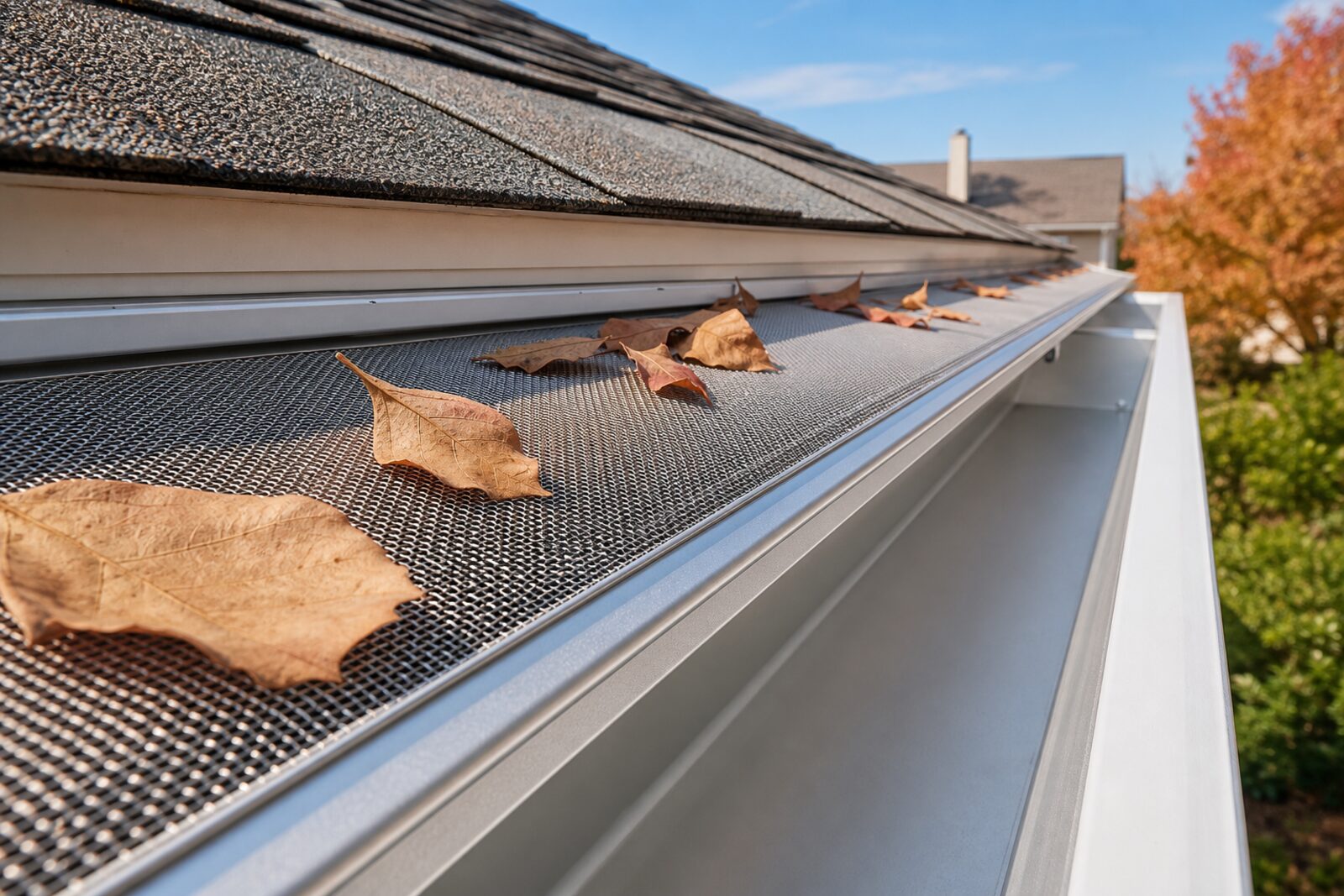
Twice a year, the ladder comes out and someone ends up on the roofline scooping wet leaves out of the gutters by hand. Skip that too many seasons running and gutters sag under the debris weight, overflow rots the fascia, and water ends up near the foundation instead of away from it. Gutter guards break that cycle. This guide covers five DIY guards homeowners install themselves over a weekend — no contractor crew required. That's different from professionally installed systems like LeafFilter or LeafGuard, which bundle the guard with paid installation and a warranty; we cover where those make more sense at the end.
- Raptor Gutter Guards — Best Overall
- GutterBrush — Easiest Install
- Amerimax Home Products Gutter Guard — Best Budget
- A-M Aluminum Gutter Guard — Best for Heavy Leaf Debris
- FlexxPoint 4-in-1 Gutter Cover — Best for Snow and Ice Regions
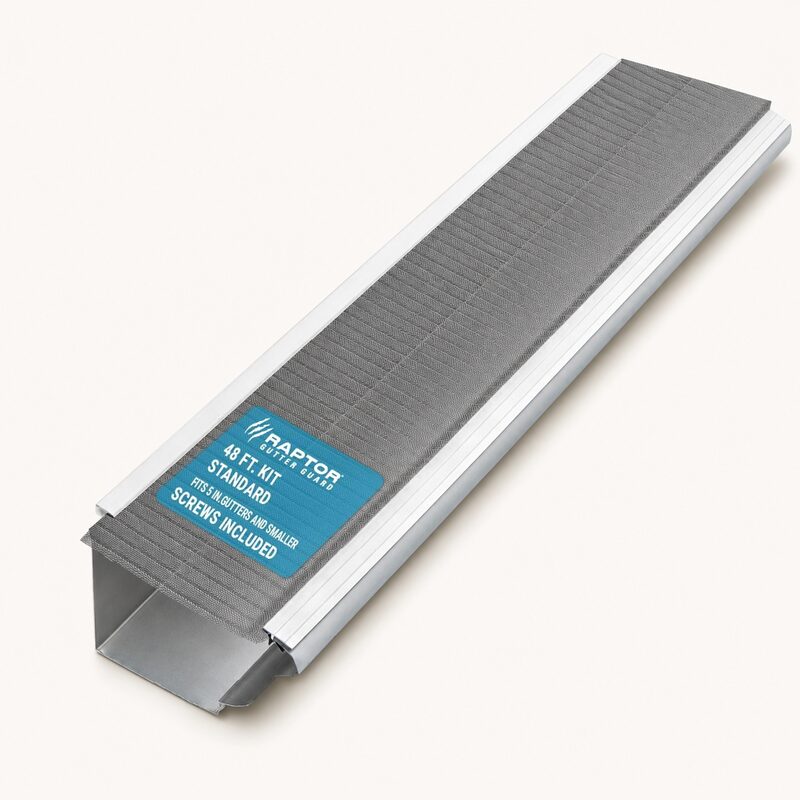
Raptor Gutter Guards
Raptor is a stainless steel micro-mesh guard, and the fine weave is why it shows up on nearly every gutter guard comparison. It's tight enough to stop shingle grit and small seed pods, not just leaves, and comes in kits for standard 4-inch and 5-inch K-style gutters with a bracket that hooks under the shingle edge and over the front lip — no roof or fascia screws.
Install runs harder than a drop-in insert: each section needs measuring, cutting, and seating at both edges. Owner reviews describe a single-story ranch as manageable in a weekend, while steep multi-story homes are where people hire the install out. Price runs roughly $3 to $5 per linear foot.
- Micro-mesh stops pine needles, seed pods, and grit that screen guards let through
- Stainless construction resists rust better than painted aluminum
- Cutting and fitting each piece precisely is fiddly, especially at corners
- Fine mesh still needs an occasional brushing in heavy pollen season
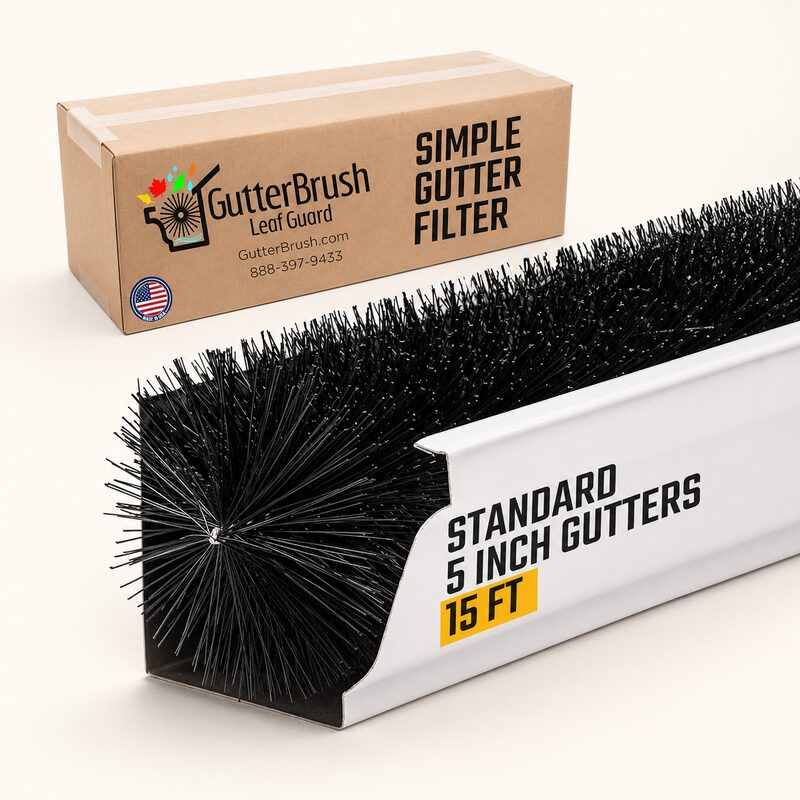
GutterBrush
GutterBrush is a cylindrical foam-and-bristle insert that sits inside the gutter trough rather than covering the top, like a giant bottle brush. Leaves land on the bristles and dry out or blow off, while water drains freely underneath. It comes in lengths for 5-inch and 6-inch gutters and just gets pushed into place, no brackets or cutting tools beyond scissors.
The tradeoff is debris handling: reviews are positive on leaves, but pine needles and seed pods work into the bristles and reduce flow, so it needs shaking clean more often than a mesh cover. Runs around $2 to $3 per linear foot; most homeowners finish a whole house in an afternoon.
- No tools, brackets, or roof-access technique required
- Easy to pull out, rinse, and reinstall for maintenance
- Pine needles and small seeds pack into the bristles more than they do with fine mesh
- Visible from the ground on some rooflines in a way flat covers aren't
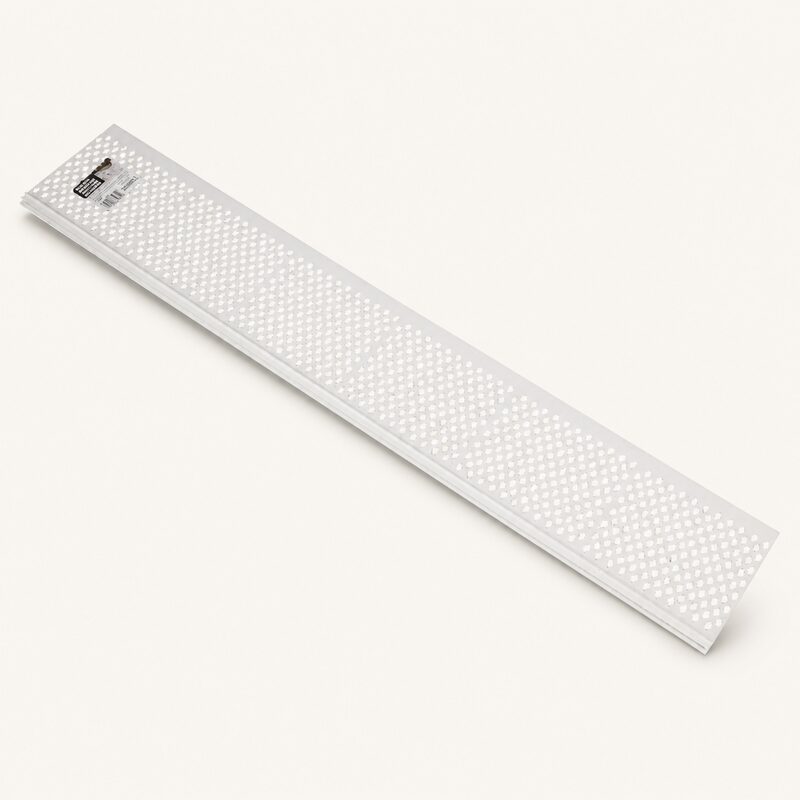
Amerimax Home Products Gutter Guard
Amerimax makes a lock-in guard molded from black or gray plastic with a perforated screen surface, snapping under the second row of shingles and clipping onto the front gutter lip. Sold in multi-pack cartons of 3-foot sections at most home improvement stores, keeping the price low. The holes are noticeably larger than micro-mesh — good for full-size leaves, less effective against pine needles, small seeds, and grit.
A reasonable choice near deciduous trees on a tight budget, less suited to a yard full of pines. Runs roughly $1.50 to $2.50 per linear foot, the least expensive option here.
- Lowest cost per linear foot of any guard on this list
- Widely stocked, so replacement sections are easy to find later
- Larger screen openings let pine needles, small seeds, and grit through more readily than mesh
- Plastic gets brittle and can crack after years of sun and freeze-thaw cycles
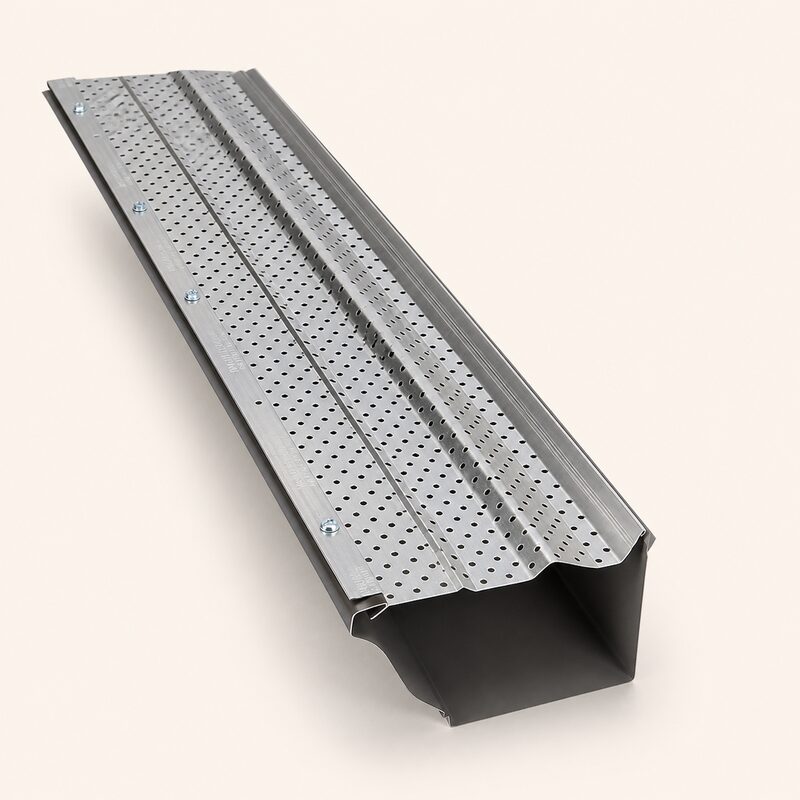
A-M Aluminum Gutter Guard
A-M Aluminum's guard is a rigid aluminum mesh panel, sold in 3-foot sections for 5-inch gutters, that slides under the roof shingles and rests on the gutter's front edge with a slight downward pitch. The frame holds its shape better than plastic, and the mesh sits between fine micro-mesh and wide-open screen — small enough to stop whole leaves and seed pods without clogging as fast under heavy leaf load.
Install requires working under the shingle edge with a pry bar or putty knife, but skips the custom-width cutting a micro-mesh kit demands. A strong fit for homes under oak, maple, or sycamore trees. Pricing runs about $2.50 to $4 per linear foot.
- Rigid aluminum frame resists sagging and warping better than plastic
- Handles heavy leaf volume without clogging as fast as fine micro-mesh
- Seating the panel correctly under the shingle edge is easy to get wrong on a first attempt
- Coarser than stainless micro-mesh, so fine grit and small seeds still get through
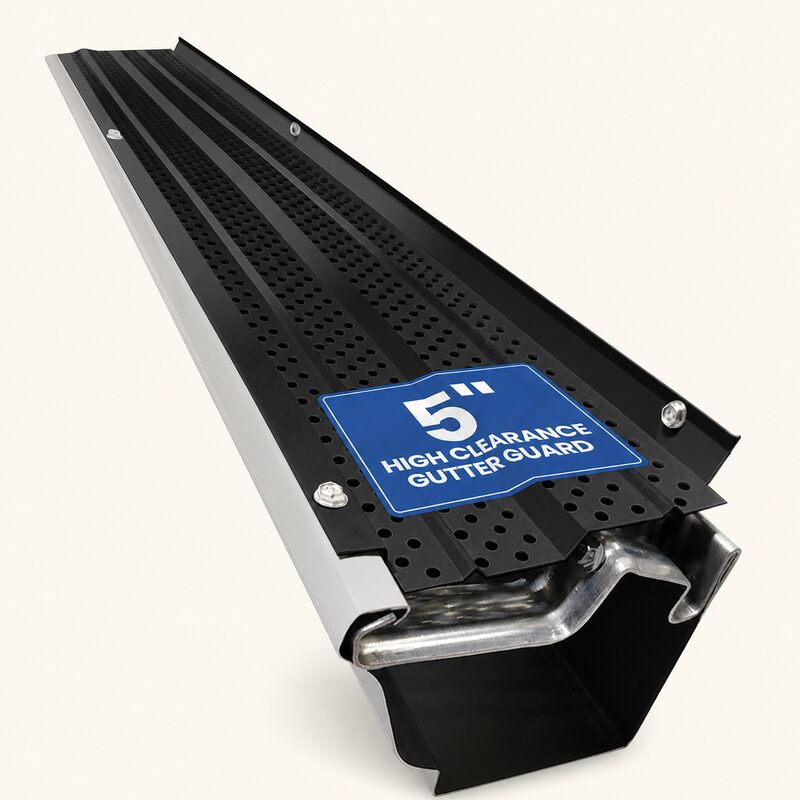
FlexxPoint 4-in-1 Gutter Cover
FlexxPoint is a solid aluminum cover rather than a mesh or screen, with a curved nose that sheds water off the roof edge into the gutter by surface tension while leaves slide off the top. With no mesh to clog or ice to bridge, roofing contractors often recommend it for homes with heavy snow, where mesh guards can become a shelf for ice dams.
The panel is reversible and adjustable for gutters from 4 to 6 inches. Install means screwing it to the fascia and sliding the back edge under the shingle line, more involved than a snap-in guard. Since it relies on water adhesion rather than filtering, fine grit or heavy pollen can occasionally ride the water stream into the gutter. Price runs around $4 to $6 per linear foot, the highest here.
- Solid surface avoids the ice-damming issues mesh guards can cause in cold climates
- Reversible, adjustable fit works across a wider range of gutter sizes
- Highest price per linear foot of the products covered here
- Fine grit and heavy pollen can still wash into the gutter with the water flow
How to choose a gutter guard
Match mesh size to the trees around your house
The biggest factor in performance is what's falling on your roof. Homes near oaks and maples do fine with wider screen or aluminum mesh. Homes near pines need fine micro-mesh or a solid-surface design, since a wide screen guard lets needles through almost as easily as an empty gutter. Older asphalt roofs shedding granule grit should weigh that too, since grit clogs micro-mesh the same way over years.
Screen vs. micro-mesh vs. brush or foam inserts
Screen guards are cheapest and handle large debris well but let smaller particles through. Micro-mesh filters the most but needs precise installation and occasional light cleaning. Brush and foam inserts install fastest with no roof work but need more frequent maintenance under pines. Solid-surface covers trade filtering precision for cold-weather durability. None is universally best — it depends on climate and tree cover more than brand.
Measuring your gutters before you buy
Most residential gutters are 5-inch K-style, but plenty run 4-inch or 6-inch, and half-round gutters need a different guard entirely. Measure the top opening's width and confirm the profile before ordering — the wrong width means guards that won't seat at the front lip.
Install safety
Use a stabilizer bar over the roofline rather than leaning directly on the gutter, have someone footing the ladder, and skip wet or windy days. Multi-story homes and steep rooflines are where hiring out even a DIY-rated product is often worth it.
Why "never clean your gutters again" oversells it
Every gutter guard, DIY or professionally installed, reduces cleaning frequency — none eliminate it. Fine grit, wind-blown debris, and the occasional wedged stick still accumulate on top of any guard, and gutters still need an annual inspection regardless. Marketing promising zero maintenance describes a best case, not the typical outcome.
When a professionally installed system makes more sense
Steep, high, or multi-story rooflines, homeowners who don't want to do the ladder work, and anyone wanting a workmanship warranty are better candidates for a system like LeafFilter or LeafGuard. Those cost substantially more than any DIY option here, but the price includes labor, an installation warranty, and sometimes a no-clog guarantee.
Frequently asked questions
Do gutter guards really work?
Yes — they meaningfully reduce debris buildup and how often you need to clean the gutters. They don't stop everything, and effectiveness varies by guard type and what's falling on your roof, so matching the product to your tree cover matters more than price.
Can I install gutter guards myself, or do I need a professional?
All five products here are designed for homeowner installation with basic tools. Difficulty varies — brush and foam inserts are close to a no-tool job, while mesh and solid-cover systems that tuck under shingles take more time and care. Steep or multi-story rooflines are the main reason to bring in a professional.
Will gutter guards stop ice dams?
Mesh and screen guards don't prevent ice dams and can, in some conditions, contribute to ice forming across the surface. Solid-surface designs like FlexxPoint fit heavy snow regions better since there's no mesh for ice to bridge. Ice dams are primarily an attic insulation issue, though, so a gutter guard alone won't solve a serious one.
How much more does it cost to hire out the installation?
DIY products here run roughly $1.50 to $6 per linear foot for materials alone. Professionally installed systems typically run several times that per foot once labor and warranty are factored in.
How often do I still need to clean gutters with guards installed?
Most guarded gutters need a check-and-clear once a year rather than the twice-a-year ritual ungaurded gutters typically require. Homes with heavy pine cover or grit runoff need to check more often.
Bottom line
For most homeowners comparing DIY options, Raptor's stainless micro-mesh is the strongest all-around pick — it filters the widest range of debris and holds up over years of weather exposure, at the cost of a more careful install. If the install itself is the bigger obstacle, GutterBrush gets a guard in place in an afternoon with no roof work at all. Whichever you choose, treat it as a way to clean gutters less often, not a way to stop checking them altogether.
Our rankings and editorial scores consider product specifications, aggregated owner feedback, availability, drawbacks, and commercial relationships. Compensation may affect inclusion or ordering; scores are our own assessments and are not Amazon or customer ratings. Commercial relationships do not permit unsupported product claims. Read more about how we review.